When designing retaining walls, revetments and cofferdams, contractors often choose between plastic-steel sheet piles and traditional steel sheet piles. Both use interlocking profiles for retaining and water sealing, yet they differ greatly in durability and total project cost.
Material Basics
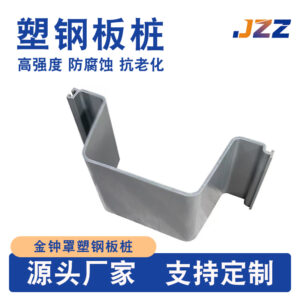
Traditional steel sheet piles are carbon steel. They offer high rigidity, but rust easily in saltwater, wetlands and contaminated soil. Protective coatings are required to slow corrosion. Plastic-steel sheet piles are made of modified high-strength polymer composites with UV stabilizers. They have no rust risk and are engineered for long-term exposure in coastal and tidal environments. Scratches during installation will not spread into corrosion.
Lifespan
Traditional Steel Sheet Pile
- Temporary projects (reusable): 6–24 months
- Permanent freshwater sites: 10–15 years with regular maintenance
- Seawater/tidal zones: only 5–8 years. Once the coating is damaged, rust develops rapidly. Rust removal and repainting must be scheduled periodically to maintain safety.
Plastic-Steel Sheet Pile
- Freshwater permanent projects: 30–50 years
- Saltwater and tidal flat projects: 20–40 years It needs almost no maintenance after installation. It can also be pulled out and reused for multiple temporary jobs.
Cost Comparison
Many buyers only check upfront material price, ignoring whole-life expenses.
- Initial cost: Bare steel may look cheaper, but anti-corrosion coating adds extra cost. Plastic-steel sheet piles are lightweight, cutting transport and hoisting costs.
- Maintenance cost: This is the key difference. Steel requires repeated anti-rust work, which accumulates high long-term labor costs. Plastic-steel sheet piles have near-zero maintenance cost.
- Reuse & recycling: Steel has scrap value if not heavily rusted. Plastic-steel piles can be reused and recycled after service life.
Best-fit Scenarios
Pick traditional steel sheet piles for:
- Short-term temporary works planned for extraction and resale
- Extremely hard ground or ultra-high retaining loads
Pick plastic-steel sheet piles for:
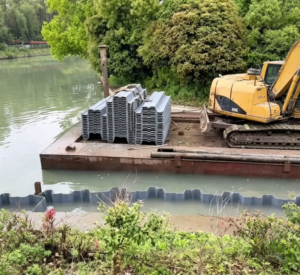
- Permanent river revetment, tidal fish ponds, cutoff barriers and landscape water retaining walls
- Saltwater, saline soil and corrosive environments
- Projects aiming to cut long-term maintenance spending
Conclusion
Steel sheet piles remain a solid choice for short-term temporary projects with turnover plans. However, plastic-steel composite sheet piles outperform steel in corrosive environments, with a far longer service life and lower total life-cycle cost for most water conservancy and slope protection projects.