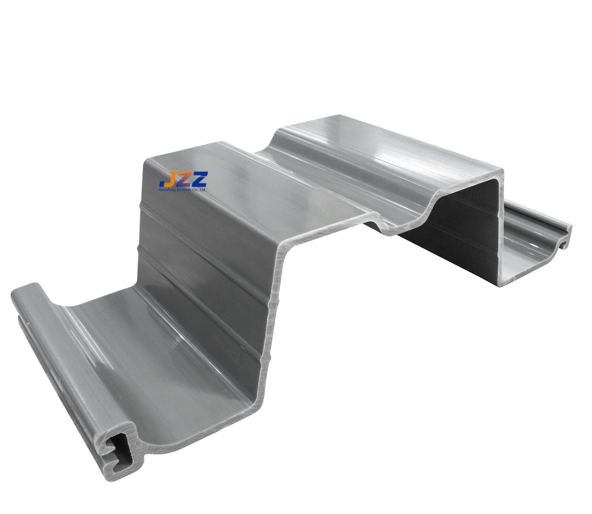
Riverbanks serve as the core defense against flooding and waterlogging while preventing soil erosion. Traditional protective materials suffer from numerous drawbacks. Plastic steel sheet piles, however, are manufactured using environmentally friendly polymer-reinforced composite materials through a single extrusion process. They combine the corrosion resistance of plastic with the high strength of steel, contain no harmful substances, and cause no pollution. As the “green guardians” of river and lake ecological restoration, they have become the preferred choice for modern riverbank protection due to their environmental friendliness, high strength, convenience, and cost-effectiveness, achieving a win-win for both engineering and ecology.
Its core advantages are reflected in four key dimensions: Safety: High strength, aging resistance, and a service life exceeding 50 years, capable of withstanding flood impacts; Ecology: Ecological pores accommodate biological habitats, materials are recyclable, and it aligns with ecological management requirements; Construction: Lightweight and modular design requires no heavy equipment and ensures high efficiency; Economics: Low cost, reusability, and comprehensive cost savings of up to 30%. Application must adhere to the following standards: Pre-construction: Clear the site, lay out lines, and inspect materials. During construction: Drive piles according to specifications and ensure secure connections. Post-construction: Conduct inspections and reinforce as needed.
Currently, plastic steel sheet piles have been widely adopted in various river channel improvement projects, demonstrating excellent adaptability and protective performance, earning industry recognition. As the “dual carbon” goals advance, they align with the ecological and intelligent development needs of riverbank protection, with their functions and application scenarios set to expand further in the future.
Conclusion: Plastic-steel sheet piles resolve traditional bank protection challenges, achieving cost reduction, efficiency gains, and long-term stability. By practicing ecological principles, they inject momentum into the construction of beautiful rivers and lakes and ecological civilization.