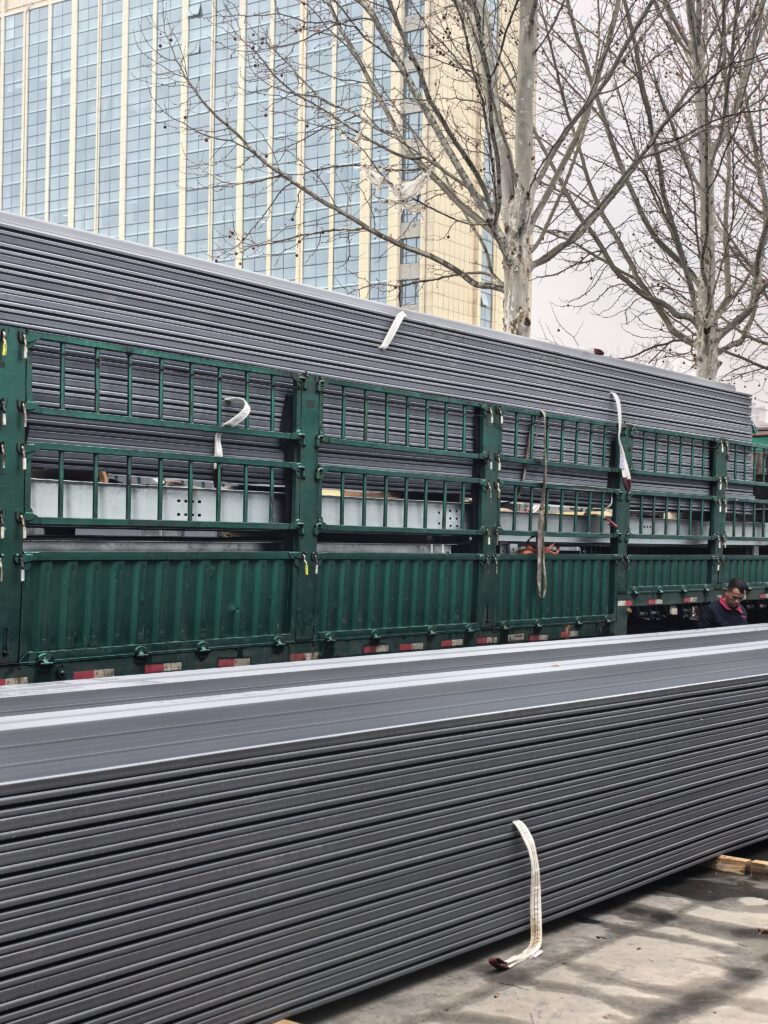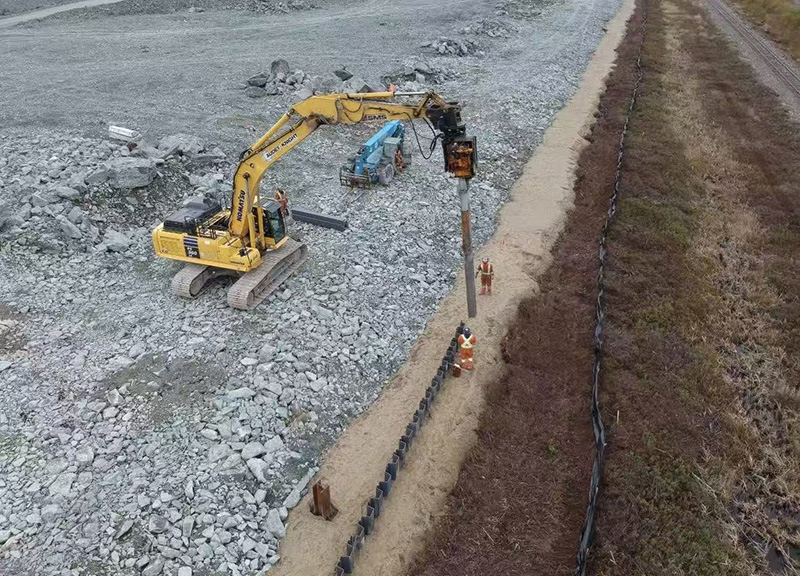
En tant que nouveau type de matériau d'ingénierie respectueux de l'environnement, les palplanches en plastique-acier allient trois avantages essentiels — stabilité structurelle, capacité de charge élevée et longue durée de vie — grâce à leur conception structurelle scientifique et à des matériaux composites modifiés de haute qualité. Elles sont largement utilisées dans divers domaines, notamment la protection hydraulique des talus, la gestion des cours d'eau, le soutènement des excavations, le génie civil et la construction portuaire, ce qui en fait une alternative idéale aux palplanches traditionnelles en acier et aux pieux en béton. Elles garantissent non seulement la sécurité des ouvrages, mais offrent également des avantages économiques à long terme.
En termes de stabilité structurelle, les palplanches en acier plastifié bénéficient d'un procédé de moulage intégré et d'une conception d'emboîtement unique. Chaque palplanche est solidement reliée et emboîtée à la suivante, formant ainsi, une fois assemblées, un système de soutènement continu et complet qui renforce efficacement la résistance globale au renversement et aux chocs. Qu'il s'agisse de résister à la pression du sol lors de l'excavation, à la force d'érosion des courants fluviaux ou à des chocs externes dans des conditions géologiques complexes, les palplanches conservent leur intégrité structurelle globale, prévenant ainsi des problèmes tels que le déplacement ou la déformation, et constituant une barrière de sécurité robuste tant pour la construction que pour l'utilisation à long terme.
Par rapport aux matériaux de palplanches traditionnels, la durée de vie des palplanches en acier plastifié constitue un atout majeur. Elles offrent une résistance exceptionnelle à la corrosion, aux acides et aux alcalis, ainsi que des propriétés anti-vieillissement, et sont insensibles aux dommages causés par les insectes. Il n'y a pas lieu de s'inquiéter de la rouille ou des dommages dans des environnements difficiles, tels que ceux présentant une forte humidité, des conditions salines-alcalines ou des nappes phréatiques élevées. De plus, elles ne nécessitent qu'un entretien de routine minimal et ont une durée de vie de plusieurs décennies, dépassant de loin celle des palplanches traditionnelles en acier et des pieux en béton. Cela réduit considérablement les coûts d'entretien à long terme, ce qui en fait une solution de soutènement écologique, durable et rentable.