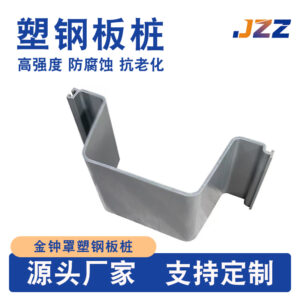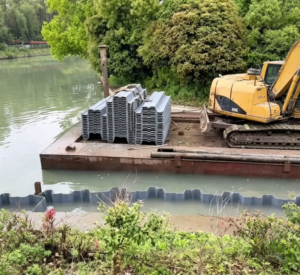
Plastic‑steel sheet piles can be used well in different temporary construction projects. They are reliable materials for temporary shoring and cofferdams in water conservancy and civil engineering work.
Compared with traditional steel sheet piles and masonry cofferdams, plastic‑steel sheet piles bring many benefits. They allow fast on‑site installation, lower overall costs, and good anti‑corrosion performance. Another key advantage is reusability. These features make them popular for river channel jobs, foundation pit excavation work, and emergency flood‑control projects.
For temporary‑use cases, plastic‑steel sheet piles have a broad range of practical applications. Common uses include temporary cofferdams for river dredging, earth‑retaining support for shallow foundation pits, retaining barriers during ditch excavation, emergency flood‑protection works, and temporary site enclosures.
They work best for short‑term jobs that do not require permanent retaining structures. You do not need huge heavy‑duty construction equipment for installation. Workers with small‑sized construction machines can finish the pile installation quickly. This helps shorten the whole construction period for temporary support works.
These composite sheet piles have natural rust‑proof and corrosion‑resistant properties. They stay intact even after long‑time submersion in water or contact with wet soil. Unlike metal steel sheet piles, you do not need extra anti‑corrosion coating treatment on site, which cuts down the maintenance expense of temporary works.
High‑quality virgin‑material plastic‑steel sheet piles can be pulled out after construction. They can be reused on later projects. It is an eco‑friendly solution and helps control total project expenditure.
However, we still need to follow important limits during application. Plastic‑steel sheet piles have limited bending capacity. They are recommended for retaining heights within 3 meters for shallow retaining walls and cofferdams. If you have deep excavations or higher retaining walls, you must add steel waling beams and lateral bracing for extra reinforcement.
Keep in mind that continuous direct sunlight will make ordinary sheet piles turn brittle with aging. When your temporary project will last longer than two years, you should select products formulated with UV‑resistant additives. Never force driving into hard gravel ground; this will damage the pile body and cause cracks or water leakage at interlocking lock joints.
To conclude, as long as you select suitable products and follow standard construction procedures, plastic‑steel sheet piles can satisfy most temporary‑project requirements. They deliver excellent cost‑performance as temporary earth‑retaining and water‑retaining shoring materials.