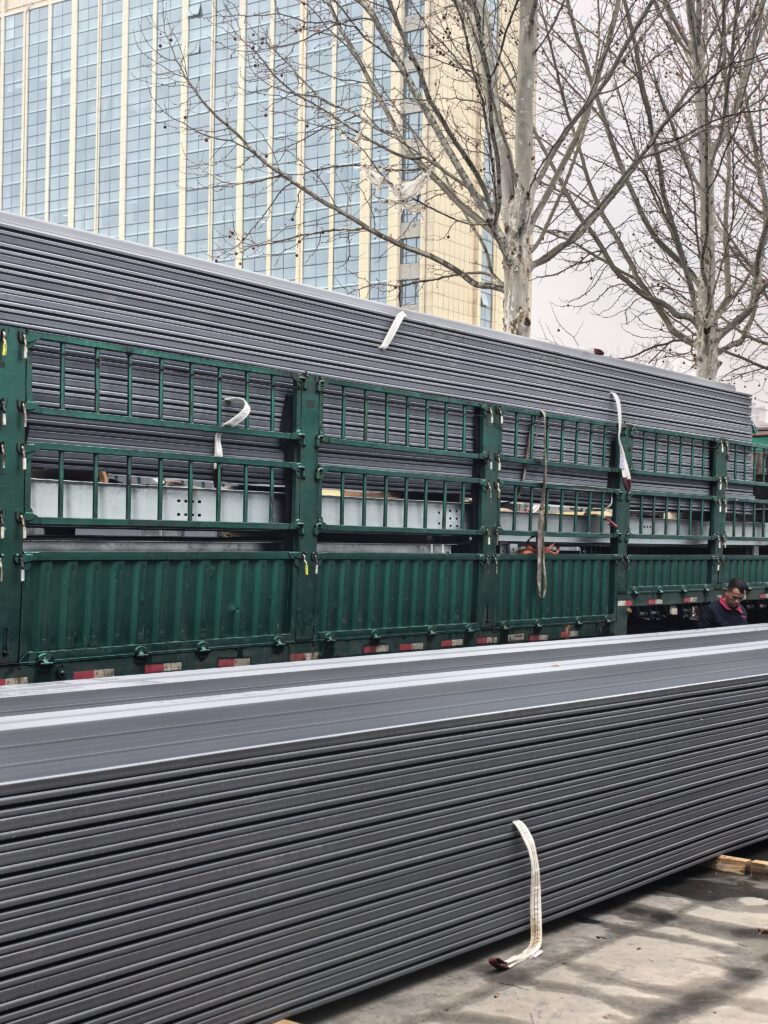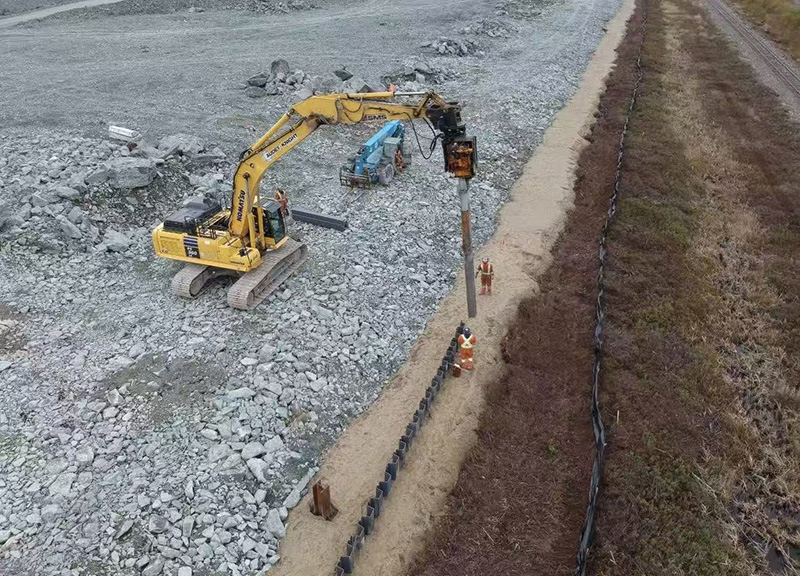
Plastic-steel sheet piles are primarily classified into three cross-sectional types: MA, M, and Z. Each type has structural differences in terms of flexural stiffness, interlocking seal integrity, and resistance to lateral pressure; the appropriate type must be selected based on the project’s water depth, hydrostatic and soil pressure, as well as scouring and corrosion conditions.
Cofferdam projects involve high loads and stringent impermeability requirements; deep-water and large-span permanent cofferdams are best suited for Z-type sheet piles, which offer high rigidity and excellent sealing performance. For shallow-water temporary cofferdams and excavation pit waterproofing, M-type sheet piles with balanced performance can be selected. MA-type sheet piles lack sufficient rigidity and are not suitable for high-load cofferdam applications. River embankments are permanent hydraulic structures; for embankments with high flow velocities or those adjacent to the open sea, Z-type sheet piles with high scour resistance and minimal deformation are the preferred choice. For conventional inland river slope protection at water depths of 1.5–2.5 m, the highly versatile M-type sheet piles are suitable, while lightweight MA-type sheet piles may be used for shallow, gently sloping, static riverbanks.
For aquaculture ponds, the focus is on impermeability and resistance to salinity and alkalinity. M-type and Z-type sheet piles, which offer excellent corrosion resistance, are suitable for seawater and brackish water aquaculture ponds; for shallow freshwater aquaculture ponds with water depths below 1.5 m, where loads are low and there is no severe scouring, lightweight MA-type sheet piles—which are easy to install—are appropriate. Overall, the selection can be summarized as follows: choose MA-type sheet piles for shallow-load, static conditions; use M-type sheet piles for general-purpose projects; and select Z-type sheet piles for deep-water, high-load, and permanent projects.