In river channel management projects, plastic steel sheet piles are reshaping traditional remediation models with their eco-friendly and efficient characteristics. Compared to concrete-hardened slope protection that damages ecosystems, plastic steel sheet piles have become the preferred choice for ecological remediation due to their unique advantages.
Fabricated from polymer composite materials, they resist acid and alkali corrosion, maintaining stable underwater service for 20-50 years while effectively withstanding water erosion and sediment abrasion. Their interlocking design enables seamless assembly, forming a reliable impermeable system that prevents riverbank soil erosion and avoids water pollution caused by leaks in traditional materials.
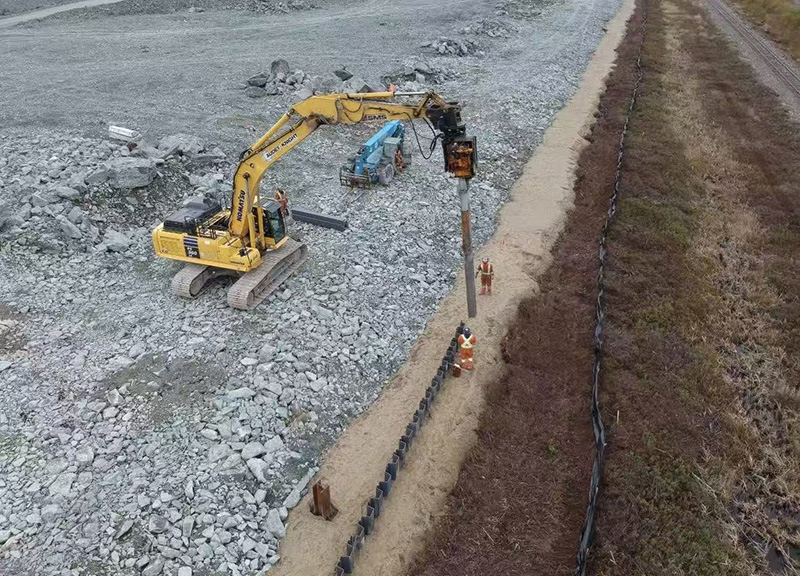
Their most prominent advantage lies in ecological compatibility. Customizable models with ecological holes can be filled with planting soil to cultivate aquatic plants, establishing riparian vegetation belts that provide habitats for aquatic life and promote river ecosystem restoration. Installation requires no heavy machinery—manual labor with small equipment enables rapid deployment, minimizing disturbance to surrounding environments. Additionally, the recyclable and reusable material aligns with green development principles.
From urban black and odorous water body remediation to rural river ecological restoration, plastic-steel sheet piles demonstrate outstanding performance in scenarios such as bank reinforcement, slope protection, and ecological buffer zone construction. They achieve an organic integration of engineering protection and ecological conservation, providing innovative solutions for building sustainable river ecosystems.